NYX Ditech

Categories
Blog Design Technology Web Design

Tips To Choose A Website Builder for Your Next Project

Every business needs a compelling website these days. We come across loads of websites on the internet, some of which we find very attractive, some not so much. A lot of these websites are developed using website builders, which are great assets and expedite the process of designing and developing a website. A website builder is an effective tool to design a corporate website, blog, landing page, an eCommerce portal and a lot more.

A good website builder is easy to understand for even novice web designers. It typically provides templates and features that are based on web design best practices. But, what should you look for in a website builder to zero down on the best one for you? In this article, we will discuss exactly on that. Irrespective of the size of your business, this article will help you choose the best website builder platform for your website.

Set Your Budget

First and foremost, examine and ascertain your affordability. There is a website builder for every pocket. Start by considering the other costs involved in building your professional website. While deciding on the budget, consider the other costs involved as well, like domain registration and hosting. The images and copy for your website will also require some investment.

A lot of website builders offer a free plan, but that has its own limitations. Mostly the services cost somewhere between $5 to $40 a month, for plans that offer features required by businesses. If your budget is limited, you can save money by looking for plans that bundle different website services you need.

Prioritize Your Needs

Every business and website will have different needs. Based on these needs, a suitable website builder can be selected. Before you can decide on the best website builder platform, you need some idea of what you want your website to do and be like. Consider the level of experience you have in designing. Most websites builders are made for people that don’t have much experience with design or website coding. Still, some of them are easier to understand and get used to.

If you’re a newbie and would be starting from scratch, then look for a builder that offers website theme templates and drag-and-drop design options. If you want a lot of options and flexibility in designing your website, then go for a website builder which offers plenty of templates and further flexible editing options.

For instance, if you’re developing an eCommerce website, think if your website will include videos? A photo gallery? A blog? A map that shows where your store is located? Make sure your website builder supports the types of content formats you plan to include.

Also, Make sure the website builder you pick provides responsive website templates or other options to make your website mobile friendly.

Look For Ease Of Use

You don’t want to scratch your head figuring out how to use your website builder. Make sure the builder you select is one which can be easily interpreted. The key thing is ease of use for your comfort and at your skill level.

If you have a background in coding and want customization, you may use slightly advanced tools like the most popular builder – WordPress; you can also buy customizable templates. The templates also vary in ease of use, so choose wisely.

To be fair, almost all independent website builder platforms are easy enough to use. However, the features provided by the builder creates a huge difference. Always go for a feature-rich website builder as it adds to the ease of use.

Consider After Sales Service And Support

A quality website builder will have a solid support and troubleshooting team in place. The team would promptly answer your queries and troubleshoot if anything goes wrong.

Generally, customer service levels vary, based on the pricing plan you choose, but is an important consideration before choosing a website builder.

The support is offered at various levels, email support, priority support via email, chat support, or phone.

Check Out The SEO Features

No matter how good your website is, it’s of no use if people are not able to find you on the web. Once you’re done building your website, you want people to easily find you. Your website should not get lost in the deep sea of countless websites over the web.

For that, you need to implement SEO best practices along with the design of your website. A good website builder should include SEO features that simplify on-site optimization. You must be able to update all the SEO meta elements, on each page, without any hassles, so as to provide your sitemap to the search engines.

On-site optimization is just one part of SEO, but surely a significant one. An SEO feature-rich website builder will help you in successfully implementing your SEO strategy into the design right from the very start.

In nutshell, the best website builder for you is the one which is easy to use, offers plenty of features, meets your specific needs, has a strong support team, and is easy on your pocket. Sounds too much of information? Don’t worry, leave your design requirements to us. Discuss with our design gurus and get your dream website designed cost-effectively.


Categories
Blog Design Technology Web Design

Want To Be A Successful Web Designer? Here Are The Skills You Must Have

The fast-paced growth of the internet over the last few decades has created new career opportunities in Web Designing and development. The rising popularity of the internet has motivated a lot of people to learn web designing and make a career out of it. Today, you can find web designers in every nook and corner of the world. More the number of web designers, more is the competition, and that’s why it is important to differentiate yourself from the crowd and be a good or great web designer.

So, what do you do to differentiate yourself? You learn and master a specific set of skills. What are these skills you ask? Let’s checkout.

The skill set is not purely technical, it is a blend of personal traits, soft skills and technical skills. First things first, the technical skills:

1. HTML

HyperText Markup Language is the most basic requirement for a web designer. It lays the foundation on which the websites are built. Therefore, it is of utmost importance that a web designer is proficient in HTML. Even if you intend to use editors or a CMS for most of your time creating websites, knowledge of HTML will give you an understanding of how those tools work and you will be much more in control over what you do.

If at all in future, you need to work outside these editors, you won’t be in a tight spot. Take a look around, you will notice that all the pro designers have a solid understanding of HTML.

2. CSS

Another important aspect of web designing is knowledge of CSS. While HTML dictates the structure of sites, Cascading Style Sheets or more commonly known as CSS handles their visual appearance. Therefore, its a vital tool for web designers, especially front-end designers. If you learn and develop your skills over HTML and CSS together, it will be much more useful to you, as these two languages are really the magical combination that builds the structure and style basis for any web page.

3. UX

UX stands for user experience, and it is one of the most influential factors that define a website’s success in today’s world. It is the feeling that a visitor gets from interacting with a website. UX plays a vital and decisive role in determining if the user will stick onto your website or not.

A web designer who understands UX practices will approach his designs from a user-first perspective. Every designing step will be lead by a question – How can I make the user feel wonderful at all times on the website?

The navigation, content, colors, CTAs and many other factors play a role in determining the overall user experience. An improvement to any or all of these factors can elevate the user experience. If you’re good with UX, you will be appreciated across the market as a multi-purpose web designer.

4. Javascript

JavaScript is an important interactive element of a website and web developers should have a basic understanding of it, especially how it interacts with HTML and CSS. Although, web designers need not master JavaScript, unless they are doing front-end development, but a basic understanding of it gives them an upper hand. Anyone engaged in back-end development is likely to be very comfortable with JavaScript.

JavaScript works with XML files and communicates asynchronously with a web server through an approach called Ajax. With Ajax, websites load faster and various embedded objects may update without requiring a complete page reload.

5. Programming Languages – PHP, ASP, Java, Perl, or C++

In order to program web pages, you must learn at least one or two programming languages. PHP is the most common programming language used across the web today, mostly because it is an open-source language and is embraced by a strong community. It is strongly advisable to learn more than one language, however, if you choose to learn and master only one language, it should be PHP.

You can opt for a converse approach as well. Look out for languages which are less popular than PHP, but bestill are in demand across the world of web. If you are proficient in one of these languages, chances are that you will become a premium asset.

6.Design Sense

Technical skills can be learned with all the resources available to you. What really is difficult is to develop traits which can’t be learned from a book, open source, or a repository. Having a good sense of design is very important for web designers. Web design is more than just making pretty-looking websites. You must have an understanding of design elements such as typeset, images, and other basic design tools such as grid systems, typography, color psychology, web fonts, type hierarchy, and color palettes.

7. Proactivity and Creativity

An employer or client will always want inputs and proactive actions from his designer. A good web designer never fails to take the first step and contributes with his own ideas and solutions. Proactive and creative web designers can take away a lot of responsibility from the project manager, and that is exactly why they’re so appreciated.

As a professional web designer, you should understand the project’s purpose and standards, understand and fulfill a client’s expectations, and constantly come up with out-of-the-box ideas.

8. Problem-solving Skills

Working on web designing tasks you will always face roadblocks, challenges and problems. You may think of a brilliant visual element, but it might not be practical enough to be implemented. A logical problem-solving approach is a key to be a successful web designer. Every aspect, the pros and cons, usability, compatibility, synchronization between various elements etc. must be duly considered before deciding on the solution to a problem, to get the best possible solution.

9. Attention to Detail

A web designer must keep an eagle eye on every minor design element across the website. It is important to understand that even the smallest of the design elements may be decisive in determining a user’s experience and success of a website. Always be careful and give due attention to each and every element so that nothing escapes from your watchful eyes. Successful web designers pick things which average web designers fail to spot.

10. Never stop learning

Yes! It’s absolutely true for web designers as much it is for any other professional. The day you start thinking you know everything, your career starts moving southwards. The web design world is fast-paced. New technologies, design patterns, design principles and trends keep emerging at the scene every single day. A successful web designer never stops learning and keeps enhancing their knowledge to flourish and grow more.

Want to learn more?
Speak to our design experts now!

Categories
Blog Design Technology UX Web Design

Learn and Become a UX Designer By Following These 5 Steps

The importance of UI and UX has accentuated tremendously over the last few decades. UX Designer is quickly becoming one of the most popular career choices in the design industry. The design heads of the industry have realized that creating a positive user experience for a product or service is crucial to achieving their brand and business goals.

There are a lot of perks attached to being a UX designer; you get to do a lot of creative work, flexible working hours, and not to mention the attractive salary. Now we know why people get enticed by the job role of a UX designer. However, most of them are confused about how to get started. If you’re curious about becoming a UX designer, but have no idea where to start, you are not alone. In this article, we will guide you on how to start your journey of becoming a UX designer, and that too a successful one.

Who Can Become A UX Designer?

First things first, anyone can become a UX Designer. One of the biggest myths out there is that you need to be a born artist or some kind of design prodigy, but that’s simply not true. There is no specific professional or educational background necessary. Yes, you need a certain skill set, but that can be learned.

It’s not necessary that you start your career as a UX designer. Many people get into UX designing quite late in their career. However, it is very important to understand that UX is a very diverse field and before you take the first step, it’s important to understand the diversity of the field, to see if the various skills you’ll require complement your current skill-set and interests.

This is how you can start learning UX and become a successful UX designer:

1. Choose Your UX Design Field

The field of UX design is absolutely vast and it is essential to zero-down your focus on certain UX areas or fields. Decide what parts of user experience you want to learn and focus on. Ask yourself, what type of designer you want to be? The answer can be anything from an interaction designer, UI designer, motion designer, or product designer?

There may be a case that you want to focus on both design and research. It’s absolutely critical to understand the difference between various disciplines by exploring them and focus on the ones you enjoy the most or are keen to learn.

2. Get Educated – Read and Watch

Whenever you start learning something, it’s important to learn how to do it properly. There are several popular ways you can learn UX design, like academic learning at a university, applying for a UX training program, self-learning, etc. Breaking a common myth here – You don’t necessarily need a university degree to become a UX Designer.

While you can opt self-learning or go to a university, applying for a training program is a better option. A training program can help you learn the theory behind UX practices in a structured manner which will make the process of learning UX more straightforward.

Other resources to gain knowledge are social media channels, podcasts, Youtube channels, blogs etc. If you follow social media sources, you might end up being overloaded with information, and not all of it is useful. It can create a lot of confusion and may even lead you in a direction that you don’t want to go. Try to stick to 1-3 sources at the max. Follow verified and renowned industry experts. Prepare a list of 10 best UX blogs and subscribe to them to get regular learning material.

3. Get Involved in The Community

Meeting people and getting in touch with the design community will help you in not just learning the art, but also understanding how things are done in this industry. Join slack communities, local communities, participate in conferences, industry meetups, UX seminars, events etc. to get started. You will be able to share your thoughts and understand what other people think, who have been in the industry for some time now. Get into conversations with people across the UX community to understand what you actually want to learn or improve.

⁣Find mentors who can help you with your questions. Finding yourself a mentor is great advice, no matter what industry you want to break into. Especially in UX, where project work is so important, a mentor can really help you to improve your work and educate you about industry standards.

4. Master the Right Tools

In terms of software, it’s absolutely crucial that you get apt prototyping software. In a research, it was concluded that problem-solving skills are the most important skills which hiring managers look for while hiring a UX designer, followed by knowledge of UX tools. That said, it’s not easy to choose the right tools. There’s a plethora of tools available in the market and often the best option is unclear.

The task of choosing a tool can be even harder for someone who has only taken their first step into the field of UX. It’s advisable to select a tool that will help you iterate your design; a design tool should allow you to swiftly move from a rough low-fidelity prototype to a high-fidelity implementation.

5. Get Advanced

Once you have gained the basic knowledge of UX designing, learned whatever you could from various resources, it’s time to deep dive in the vast ocean of UX. Put some of this new-found knowledge into practice and find a way to apply UX in actual project work. This will help you gain vital experience. You can take on small UX projects in your current company, find a local non-profit organization and offer to design for free, or even redesign your favorite online service.

With enough practical experience, you will be ready to take up a full-time UX designer role in a design house or a company. To further enhance your skills and career, you may opt for a Master’s degree specializing in UX designing. Once you get a specialized degree in UX design, there are various avenues to explore. You may choose to specialize in UX research, information architecture, or even voice design.

The time is almost perfect to get into the field of UX designing. The world of designing has long identified the importance of creating a pleasing user experience through design. Therefore, the opportunities for a UX designer have grown multiple folds. Still have questions? Talk to our UX experts.

Categories
Brand & Identity UX Web Design

Some Tips to Get Rid of the UX Debt

A lot of times you will find yourself facing a situation wherein your product will show an inconsistent behavior or performance. This occurs due to the long-term sacrifices you have made over time for short-term gains, or what we call ‘UX debt’. In our previous article, we discussed Design Debt. We covered what it really means, its identification, impact and common causes. In this article, we will cover the ways through which you can erase UX debt most effectively and efficiently. It’s very common for a company to release a bunch of features in one go to gain market share as they focus on quick user acquisition. As a result, the cleanup work gets delayed and is pushed back for later sprints.

Getting rid of the UX debt takes time, and cannot be completed in one go. If you think that you can get rid of the UX debt in your next release, then you probably need to re-think. It’s best to create a plan and follow it meticulously to eliminate your debt. Follow the below-mentioned points to erase your UX debt:

Make a UX Debt Inventory

The first step towards erasing UX debt is to understand the debt. Whether you are a new hire or an existing team member, you must be aware of what you’re up against. This starts with creating an inventory.

For this, you need to roll up your sleeves and get your hands dirty. Use the product yourself and highlight anything you find unintuitive or confusing. Keep noting down your comments as you use the product. Another great way of performing this activity is by maintaining a spreadsheet within your team’s cloud folder and evaluating the heuristics together. The team can review the system based on some important criteria including findability, accessibility, clarity of communication, usefulness, credibility, learnability, overall aesthetics, persuasive design etc.

Evaluation process

You can create a clear picture of UX gaps by involving the whole team. The evaluation process may last a couple of weeks. Once the evaluation process is over, make sure you keep a realistic and manageable target date to slowly fill up the UX gaps.

This exercise is highly informative, however, you’re not the intended user. After conducting a UX debt inventory, you need to validate your findings by observing actual users and subject matter experts. This will help you better prioritize the work with product managers for the payback sprints or the backlog.

Prioritize Your Work

Once the UX debt inventory is ready, you must prioritize the tasks in order to address them in realistic stages.

The selection must consider a few factors:

1. How severe is the issue?

The severity of an issue must be the first factor to be considered as it may create a huge impact. How critical and big is the issue? Is it stopping users from doing their work? Is there a safety or security risk? If the issue is causing a potential customer to turn around and look to a competitor’s product, then you know that it is super critical. These kinds of issues must be right at the top of the to-do list.

Now, look at the flip side. It’s not necessary that only problems and roadblocks should be considered on high priority. If some improvements save hours of time in the course of a month, reduce errors and substantially add to the user experience, they must also be considered on high priority.

2. How long is it going to take to fix?

If all you have to do is tweak the CSS, you might slip it into the next build. On the other hand, if it’s going to require a significant amount of development or will have to be thoroughly regression tested, it may make sense to hold off until it can be resolved with other issues requiring similar treatment.

3. Who will be tasked with addressing the issue?

If the task has to be done by the UX team, and they have the bandwidth, it may be given a high priority. If it requires the attention of a specific developer who is already assigned to other high-priority work, then it will have to wait.

Make And Follow a Schedule

After prioritizing your debt, the next step is to work with product management to get it into your release schedule. Agile is the most popular approach to software development these days.

If You Aren’t Using Agile –

If you’re not using Agile, your work is most likely planned basis a release cycle. The management of your organization takes a call on what will go in the next release. They consider various factors like development effort, need of the feature, selling points, what bugs exist and how bad they are, etc.

It is recommended that UX debt issues must be handled as bugs. The real benefit of this approach is that the debt items can be entered and tracked using the same tools and business processes as bugs. This ensures timely review and treatment. Ideally, a representative from the UX team should work closely with product management when releases are scheduled.

If You Are Using Agile –

Companies that employ a healthy Agile process to prioritize debt and other types of works find it easy to manage everything. They don’t face any problems in prioritizing debt with other types of work, assigning it story points, and fitting it into sprints.

UX debt should be understood as the responsibility of the entire organization and not just the UX group. There must be a great synergy between all the teams. That said, the best way to eliminate UX debt is always avoiding it in the first place. Our UX designers will be happy to discuss your UX, UI and other design requirements; talk to them now!

Categories
Blog

All You Need To Know About Design Debt

It’s a bit unusual to connect an economic term ‘debt’ with the world of design and development. But, debt is an important term and concept here. Cutting corners with technology and releasing software too quickly can result in additional costs after the launch. We choose to quickly develop the code when a better path is available but would take longer. Technical debt is helpful for software development, where it’s about borrowing time. Technical debt supports fast iterations and experiments before the borrowed cash runs out. Design debt is a similar concept.

What is Design Debt?

In simple terms, design debt is all the good design concepts or solutions that you skipped in order to reach short-term goals. Cutting corners during or after the design stage is termed as design debt.

Debt can also increase naturally over time as the original design can’t handle additional features. The original UX was designed to create a cohesive experience around a specific set of features. The addition of new features over time breaks that cohesion, reducing consistency and creating a UX that feels increasingly disjointed. In some cases, design debt is consciously maintained within an existing product because there’s a fear that changing the status quo will upset users.

Identifying Design Debt

Design debt is somewhat necessary and is present most of the times while designing a software product. If you have zero design debt, you may be not learning or hesitant of adapting to changing needs. The design teams are the experts and can advise on when design debt needs to be actively managed down, but others on the team can also contribute to identifying this debt. A lot of times the sales teams will find that competitors are beating them in an overall sense of professional user experience and they can flag it up.

Impact of Design Debt

Too much technical debt can slow down the development process and likewise, too much design debt can reduce the selection of new features and slow growth. Existing users find it more difficult and time-consuming to use the product, while new users are frustrated by the learning curve.

As design debt builds, designers will be tempted to exceed timelines and insist on many more revisions to the work than anyone else wants. Designer’s woes grow with their inefficiency. They should focus on bigger impact stuff, but instead, they try to track down and update every small feature.

Even in the case of an established product whose users complain about any change, it will become increasingly difficult to fit-in new features without changing the design.

Common Causes

It is important to regularly refactor the design. Numerous disjointed and unrelated elements in a single field of view, all of which are competing for the user’s attention. Projects that are especially at risk for this commonly include a few of the following characteristics:

Fire drills:

When teams are dealing with aggressive goals and tight deadlines, they’re likely to cut together elements and test them in a quest to quick, short-term wins. This comes at the expense of long-term viability and it incurs substantial design debt. Making sure that you set reasonable deadlines and expectations can be really helpful in this situation.

Competing teams:

Particularly as organizations scale, they may have multiple teams working on different areas of a single product. When these teams suffer from competing goals, conflicting opinions, or poor communication, they’re very prone to build designs that are inconsistent and lack cohesion. Having a clear alignment on design goals, strong leadership, and healthy communication can help solve this.

Feature testing:

When a product doesn’t have a clear direction, teams are more prone to test abundances of features. This is to see what works and what doesn’t work. This is great for closing in on product-market fit, but as more features are tested, more debt is incurred. For early products, this can be avoided and the best remedy is regular refactoring. For older products, there is still room for this

Technical Debt:

Saving on the codebase can also have effects on the integrity of the design. This is especially the case when organizations try to solve infrastructure problems through design. Whenever a design change is recommended, it should first be determined whether or not the problem at hand is best served by a design solution.

Adopting an iterative and experiment-driven process is undoubtedly one of the best ways to learn about an audience and develop a design that truly works. By all measures, designers should be doing more of it. But it’s important to always consider the debt that can be taken on by a design over time, and plan for refactoring as necessary. Talk to our design experts to learn more about design debts.

Categories
Brand & Identity Design UX Web Design

Design Arrest: A New Way To Design Your Dreams

To grow an in-house design team or get the services from a professional design agency is a heated topic of discussion. While there are still people who believe that it’s best to have an in-house team, the majority of experts from the industry strongly believe that a professional design agency is the best option and drives the business growth.

With changing times, the design needs, trends and philosophies have also witnessed a makeover or revamp. With these changes, the process to cater to design needs also needs to upgrade, in order to provide 360-degree design solutions in the most viable manner.

Design Arrest is one such creative job-stop that revolutionizes the process of designing graphics. It is a creative agency that aims to transform your ideas and thoughts into captivating designs. Here are a few differentiating factors of Design Arrest which make it stand out from other creative agencies.

Personal Graphic Designer

The biggest challenge while dealing with creative agencies is to find a single point-of-contact. Often the person working on your request is different from your point-of-contact. Moreover, multiple people work on your project which makes it difficult to strike consistency in the design language. It’s a tiresome and time-consuming task to again and again convey your thought behind designs, brand vision and requirements to different people, every time when you make a fresh request. At Design Arrest, you don’t need to sweat it out. A personal, dedicated Graphic Designer is assigned to you, who will be available round the clock to fulfil unlimited design requests.

Design Your Dreams


Flat Rate

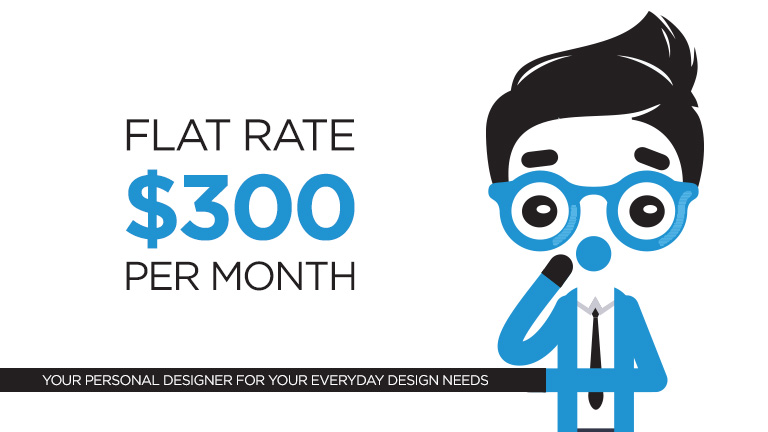
Generally, the cost of every design request is calculated basis the type of request, required efforts, time required and nature of the request. This leads to variable costing and often shakes the planned budget for designing. Design Arrest understands the importance of budget-forecasting and values your money. They charge a flat fee, $300 per month, for all your design requirements. There are no hidden charges, taxes, or service charges at any given point-in-time. They believe in clarity, trustworthiness, and developing mutually benefitting, long-term relationships.

Flat Rate

Unlimited Requests / Revisions

Here comes the best part. There are absolutely no bars on the number of requests you raise or the number of times you request revisions. Until you are fully satisfied with their work, the team will not rest. The objective here is to completely satisfy the design needs. Putting a cap on the number of requests will require clients to hand pick the requests, normally the most critical and significant would be passed on, however, a lot of essential requests may not come through only because of the restriction on the number of requests. But, with unlimited requests and revisions, all your design requirements are bound to be fulfilled.

Daily Output

The design process is not a one day job. Some projects last for weeks or months, and some may even be a continuous task for years to come. It becomes difficult for project managers to track the progress and status of the design requests, especially when there’s a provision of shooting unlimited requests. The team at Design Arrest allows you to raise requests every business day and get them served with desired output on a daily basis. This makes your job easy to track the progress and analyze how the work is going on.

No Commitment, No Contract

Unlike many creative agencies, Design Arrest doesn’t bind you in any kind of contract. In case you find any reason to end its services, you’re free to discontinue from that moment itself. You are not at all bind by any regulations or conditions. You are billed on a monthly basis, get the services on a monthly basis and can stop any time you want. Everything that is created by Design Arrest for you is completely editable and belongs to you. They claim no ownership even after you discontinue its design services. Also, they do not disclose or share any information related to your project or business with anyone else.

One-Stop Design Hub

Design Arrest simply designs everything. Be it websites, banners, downloadable, brochures, or anything on web or print media, they design it for you. No matter how diverse or intricate your design needs are, you are sure going to get the solution, with its widespread services ranging across logo design, business collaterals & literature, promotional merchandises, mobile apps, web pages, e-stores, social media creative, presentations and infographics.

Design Arrest certainly stands out in terms of delivering high-quality design solutions at a reasonable price with feasible payment options, and is backed by result-oriented, trend-driven, highly enthusiastic creative brains who are striving to create a difference. You can check out their work here.

Categories
Blog

Top 5 UX Trends Prediction For 2019

The web design world is highly dynamic and fast-paced, especially the UX. With every new year, comes new ux trends and techniques which drive the designing industry. 2018 was all about data-driven UX, accompanied by the rise of the UX researcher role. Privacy by design was also talked about a lot in light of the GDPR. In addition, a new concept popped up – DesignOps. What will be driving the UX industry this year? Whether it will be DesignOps or something else? Here are a few predictions from us for the UX trends in 2019:

1. Businesses Will Be Driven By UX

It’s a known fact now that UX is a major driving force for any kind of business, and this will continue to be a central topic in 2019 as well. In recent years, a lot of studies have been conducted to measure the business value of a good design. It’s crucial to realise the importance of UX and to incorporate it on a strategic level. As we move into 2019 and beyond, designers will start to develop more empathy for businesses and not just for users. In the coming years, a lot of designers will aim to make data-driven decisions, to measure the effectiveness of their designs, and to optimize their processes in a way that makes sense for business. Prototyping, testing and customer research are pivotal tools in starting new business ventures. UX designers will become a valuable resource for entrepreneurs.

2. Storytelling Will Be More Important

From a consumer perspective, good UX is no longer considered a unique selling point. From being ‘good to have’, it has now become a ‘must have’. In today’s world, if a product or service provides a below-par user experience, the user will discard and replace it in no time. Designers will have to focus on creating a truly memorable user experience rather than just decent user experience. As brands seek new and innovative ways to differentiate, we’ll see a growing trend towards storytelling in UX. Scientific research has shown that, as humans, we get fascinated by stories. When we hear a story, the neural activity in the brain increases up to five times, meaning that we are much more likely to remember the story and the message it’s trying to convey.

The same goes for products and services. It’s no longer enough to simply signpost a user throughout your product; more and more brands (and UX designers) will need to tell a memorable story. In 2019, UX designers will use storytelling to translate user value into reality, creating products and experiences that consumers relate to on a deeper level. Learning how to incorporate storytelling into the design process will be one of the biggest areas of opportunity for UXers next year.

3. More and More UX Writers

2018 was about the rise of UX researchers and this year too we will see an increase in the popularity of specialist job titles. One particular role that’s earning plenty of attention is that of the UX writer. Giants like Google, Amazon and YouTube already have identified the need and importance of UX writers, and have got them into their design teams. Try searching UX writer on any of the popular job portals; the number of results will amaze you.

There are several reasons why the demand for UX writers continues to grow. As mentioned above, brands are seeking new ways to stand out; looking for ways to fine-tune the user experience as thoroughly as possible. In doing so, they are realizing that copy is as crucial to the overall design of the product as wireframes, prototypes, and UI elements. Be it a CTA on a button or the message that pops up when a user makes a purchase. The voice or tone of a user interface is just as influential as the colors, typography, and information architecture. So, it makes sense that writers and designers work closely together.

4. Voice-Driven Interfaces Will Be a Hit

Voice continues to be a talking point, with rapid growth on the horizon for 2019. Deloitte Global predicts that the smart speaker industry will be worth US$7 billion in 2019, signalling a 63 per cent growth rate from 2018, and making smart speakers the fastest-growing connected device category worldwide in 2019. At the moment, people are mainly using their Alexa and Google Home devices to play music, check the weather and perform some basic tasks. However, if the market grows continually and has a truly valuable impact on people’s lives, voice-first devices need to become more useful beyond these basic functions. That said, the industry will now need designers who can create useful, user-friendly voice applications; designers who can take the voice experience from average to fabulous.

5. The Latest Term: Device-agnostic

Along with DesignOps, there’s a new buzzword that’s trending, and will be ruling the charts in 2019: device-agnostics. The modern-day answer to responsive design, the device-agnostic design is taking seamless user experience to a whole new level. With the rise of wearables and voice assistants, it’s no longer enough to simply cater to mobile and desktop. The UX mindset is shifting, and in 2019 and beyond, designers will think in terms of the user journey as a whole, not just in terms of the devices being used. Device-agnostic design creates a continuous user journey that can pass through different touchpoints; be it a smartphone, a laptop, or a smart speaker. The device-agnostic design is dynamic and adaptable. It lets you complete your user journey in the most convenient way possible.

Much like storytelling, brands who focus on holistic user journeys rather than devices will set themselves apart in 2019. Therefore, designers will need to adapt their approach in line with the direction the industry is taking. On the whole, 2019 looks set to be another exciting year for UX. You can speak to one of our UX experts to learn more.

Categories
Web Design

The Importance Of Web Design In Marketing Campaigns

A company’s website is its primary introduction to the world of web, and it needs to be as effective as possible to create a stunning first impression. Even the best marketing campaigns could miserably fail if they go along with a poorly designed website. The marketing strategy of your company may be convincing enough to grab the attention of prospective clients, but it is your website that will lead them to make the final purchase thus providing you with some real ROI. In this article, we will help you understand the importance of high-quality web design and will educate you about how it can accentuate the success of your marketing efforts.

Direct Impact on SEO

What’s the point of marketing yourself, if users can’t find you. A lot of businesses opt for website redesign these days because their current designs simply do not help their Google rankings. The first step is usually eliminating duplicate content occurrences which is the easy part. Additionally, it is important that your website design contains options for inputting meta descriptions, Alt tags etc., considering that these are some of the simple, yet important, elements of SEO.

Main Source of Conversions

The foremost aim of any business is to increase its business, which is generally done by increasing conversions. The goal of marketing efforts and even the website is to generate new and recurring business. The conversion rate is calculated by the number of website visitors who complete the desired action – purchase, register, subscribe etc. Designers can design website that boosts conversion ratio by improving the layout, text, and online forms. It is important for a business to accurately convey its goals to the people designing its website, so that they can act accordingly. These web development experts can provide you with not only a great looking website, but also one that is effective, in terms of improving your overall conversions.

Improves the User Experience

User experience, or UX, is a very important factor that needs to be taken into consideration when we talk about website design and its effect on a marketing campaign. For example, you can create high-quality content and place it on your site, and then use different channels to advertise it. However, if your website is not user-friendly, the efforts will be pointless because all the people you have attracted using marketing tools won’t stick to your website long enough to check out your content and your product.

Other important UX features include website speed, navigation and visual elements. It’s not good if your website takes too long to load. A new user is almost guaranteed to leave before even giving your website a chance. According to a survey, nearly half of web users expect a site to load in two seconds or less. They tend to abandon a site that isn’t loaded within three seconds. So there is very little room for error.

The next feature that has a great impact on UX is navigation. Make sure you simplify it. Easy navigation ensures longer stay on the website and there is a bigger likelihood of conversion. The visual elements that make up your website also play a vital role in elevating the UX of your website. They need to be designed in such a way so as to provoke emotions in your users.

Helps to Reinforce Your Company’s Message

Your website design is important for elevating your brand awareness and conveying your company’s goals. Besides successfully conveying your company’s message, it also helps in evoking emotions in your users. Some carefully chosen images in combination with the right colour choices in the background can have a huge impact.

Website design can play a lot of different roles in a marketing campaign. The design can be there as a support system for reinforcing the desired message. Even be the epicentre around which the whole campaign is built. It is a powerful tool that can both educate new users and drive them to make a purchase.

A well-designed website leads to a successful marketing campaign. Efforts and funds you invest in a marketing strategy can be a waste if you don’t have the right design. Discuss your website requirements with our team of experts.

Categories
Web Design

Step-By-Step Approach To Create A Successful Website

Creating a high-quality, high-conversion website has become a basic necessity for any kind of business these days. No matter how large or small your business is, the success is significantly driven by the type of interaction users have with your business through your website. For this reason, it’s important to devote a considerable amount of time, thought and vision to website development. This 7-step approach for creating websites helps to deliver a stunning and successful website almost every time and every web design & development team must take a note of it.

1. Discovery Phase

Before starting any bit of the website development, it is important to understand the core business of any company, its competitors, current online presence and the desired outcome from the company’s website. It normally takes around 5-6 meetings and a few telephonic discussions.

In this phase, the Key Performance Indicators (KPIs) for the new site’s success like more traffic, more sales, more enquiries etc. must be decided. It’s basically an introduction phase to get to know the business and its online potential. Once the information has been gathered, the discovery process documents are handed over to the project manager who can take things forward.

2. Architecture Phase

With the information gathered in the discovery phase, the project manager will take the website project onto the next stage which is the architecture phase. Here, the project is split into tasks and each task is assigned to a team member with a deadline. This phase includes mood board creation and wireframes for key pages, in addition to collecting all the text, images, files and documents needed for the website. Copywriting also falls into this phase. Once everything is gathered together, one can move onto the graphic design element and mock-ups.

3. Design Phase

In comes the most exciting phase – the design phase. The team of graphic designers will now create all the graphics required for the project. Throughout this period, the project manager will be in constant touch with the design team to ensure that the design work is carried on based on the exact requirements. The design phase can include mock-ups of the final website pages, logo designs and stationery. Once this work is complete and you have finalised the designs, it’s time to start creating the website.

4. Development Phase

Once all of the designs have been approved, the team of web developers will begin to create the website. At this stage, the project manager must ensure that everything is running on time, to plan and on budget. Development process normally includes some re-work and poses many unexpected challenges; a realistic deadline for completion of the development work must be set keeping these challenges in mind.

5. Testing Phase

This is one of the most important phases in the website building process. Once the website is fully built, the testing can take place. The professional developers and managers test the functionality, navigation, logic and everything else related to your website to find out any possible issues from the build process. They follow a systematic process to find, note and analyse all the issues found, and thereafter, ensure that all the bugs and issues are totally fixed before the website goes live. Testing is not limited till the pre-launch period. A lot of issues come up only once the website goes live. Therefore it’s a good practice to also test the website once it’s launched, at least for the early phase.

6. Launch And Training Phase

That’s it! It’s launch time. The time which is awaited by everyone. After performing all the above steps, it’s safe to say that the website is good to go live. Once it goes live, a few basic checks must be performed to see if the website is performing the same as it was on the test server. A certain amount of staff training is also required including the business stakeholders and website operators to get them familiar with the website. The level of detail and difficulty entirely depends on the trainees. Keeping the back-end of the website safe and secure is paramount, and therefore, training on how to update software and anti-virus must also be provided.

7. Marketing Phase

A typical website development cycle ends at the sixth step. However, in today’s world, it’s not enough. There are billions of websites floating on the web and all the efforts and pain taken in creating a wonderful website will go in vain if nobody knows that it exists. That’s where marketing, digital marketing to be precise, comes into the picture. Proper marketing channels and mediums must be selected to promote your brand and its website.

Social media is one of the strongest marketing channels and must be fully leveraged to extend your website’s reach and boost its presence. The marketing efforts depend on the marketing budget of the business, however, small or big, marketing efforts are a must.

It’s hard to find a perfect team, set of people with various skills required during each phase of website creation. Moreover, it becomes difficult for businesses to focus on the whole process. That’s where a professional digital agency like NYX ditech comes to the rescue. Our dedicated team of professionals draw on its vast knowledge and experience to deliver a stunning, successful, high-quality and high-conversion website. Talk to us and discuss your requirements.

Categories
Web Design

Looking To Develop a Professional Website? Keep These Tips Handy

A compelling design or enticing content is not enough for a successful, professional website. There must also be a sense of style that feeds your website’s user experience and functionality while being easy to understand at first glance. That said, different people prefer different styles, and preferences can be poles apart. But still, there are a few ground rules that should be followed when deciding on the appearance of your website. Here are 5 quick tips that you can follow to keep your website professional and successful.

Keep A Minimalistic Homepage

People don’t really read on the web. They simply scan pages, picking out keywords and sentences. Keeping this in mind, it’s better to target on emotions rather than word count. The lesser the information you feed visitors, better are the chances of them to remember. That makes it more likely for them to do what you wanted them to do in the first place. Text and calls to action are necessary, of course, but make sure to break them up with larger subheadings and legible paragraphs. Moreover, use images or icons as alternative ways to communicate.

Design With Visual Hierarchy In Mind

We’ve evolved a lot over the years. With computer screens and smartphones, as the technology to display information evolves, it remains the designer’s job to arrange the content in a clear manner. The amount of time to grab someone’s attention and tell them what your site is about, is very less. With a clear hierarchy to your information, readers can’t help but unconsciously follow the breadcrumbs you have left for them. Then apply color, contrast, size and spacing for further accentuation, remaining conscious of what is drawing attention on your page and making sure that it’s always intentional. Strips are one of the best design elements for creating a strong visual hierarchy.

Easy To Read Content

Readability measures how easy it is for people to recognize words, sentences, and phrases. When your site’s readability is high, users will be able to efficiently scan your site and take in information from text without much effort. Fonts on your website must be clear and readable. A typical rule of thumb you’ll see on the web is to keep your body text at least 16pt. That said, it largely depends on the type of font that you use. Sans Serif (without serif) are typically the best choice for online texts. As a rule, don’t use more than three different typefaces throughout your website. However, there might be a need of more than that, but if you do choose to use a variety of fonts, the overall effect should be harmonious, not cluttered.

Smooth And Easy Navigation

Having a professional website that’s tough to navigate is like owning an expensive copy machine that faces frequent paper jams. People will get irritated, frustrated and will simply bounce off. A lot of websites are still confusing, cluttered, and difficult to navigate, even though they look pretty. Starting with the navigation bar, you’ll want to make sure that you choose the right categories for it, ensure that you separate your product groups properly and don’t have too many categories. Also, make your navigation bar sticky. A sticky navigation bar means that it stays at the top of the screen no matter how far a user scrolls down.

Mobile Friendly

Let’s admit, mobile has become an integral part of our lives and a majority of people use their smartphones to access your website. So it becomes important to ask, what do my visitors see when they access my website on the go? That’s why you need to keep a mobile-first approach while designing your website, so that you can keep pace with the increasingly mobile world. If you take a look at mobile design trends over the last two years, you will notice a lot of attention is given to minimalism and simplicity of design. Put yourself into your users’ shoes, and test out every page, user action and button.

For developing a professional website, it’s important to keep these tips in mind. However, these are not the only things. There are a lot of other tips, tricks and thinking which goes behind developing a good website. Talk to our experts and discuss more on it.